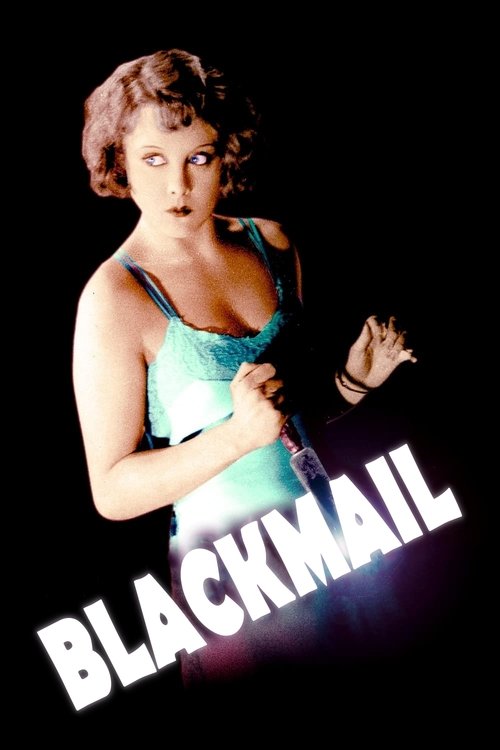
Blackmail (1929)
Genre
:
Drama | Thriller | Crime Rating
:
6.5 / 10
Release Date
:
11 July 1929 Resolution
:
1920x1080
Duration
:
1 : 26 minutes
Spoken Language
:
English Status
:
Released Overview
:
London, 1929. Frank Webber, a very busy Scotland Yard detective, seems to be more interested in his work than in Alice White, his girlfriend. Feeling herself ignored, Alice agrees to go out with an elegant and well-mannered artist who invites her to visit his fancy apartment.
Cast Overview :

Alice White
by: Anny Ondra

Mrs. White
by: Sara Allgood

Mr. White
by: Charles Paton

Detective Frank Webber
by: John Longden

Tracy
by: Donald Calthrop

The Artist
by: Cyril Ritchard

The Landlady
by: Hannah Jones

The Chief Inspector
by: Harvey Braban

The Detective Sergeant
by: Ex-Det. Sergt. Bishop

Man on Subway (uncredited)
by: Alfred Hitchcock
Boy (uncredited)
by: Johnny Ashby

Alice White (voice) (uncredited)
by: Joan Barry
Sergeant (uncredited)
by: Johnny Butt

Gossiping Neighbour (uncredited)
by: Phyllis Konstam
The Chief Inspector (silent version) (uncredited)
by: Sam Livesey
Gossip Woman (uncredited)
by: Phyllis Monkman
Crook (uncredited)
by: Percy Parsons
Member Reviews :
I saw the silent version recently with an expertly played piano accompaniment that added loads to an, admittedly rather too long, drama. "Alice" (Anny Ondra) has a silly spat with policeman boyfriend "Frank" (John Longden) and then rather foolishly hooks up with an odious artist (Cyril Ritchard) who attempts to push his luck too far and whom she accidentally, rather brutally, despatches. Terrified that nobody would believe her, and rather than call the authorities, she flees the scene - but not before she is spotted and subsequently has to deal with the venal aspirations of her blackmailer (a perfectly cast Donald Calthrop). Meantime, the police get the wrong end of the stick during their investigation and another tragedy ensues - leaving poor old "Alice" riddled with even more guilt! The one thing that takes a bit of getting used to is the really rather static nature of the photography, but once you adopt a perspective that you are in the same seat (in the cinema) as the cameraman then that actually starts to work quite well as we become more immersed in a solid story of fickleness and deceit. The inter-titles are sparing but do all that is necessary to augment Hitchcock's innate ability to tell us a story using the limited technology available in 1929, that capitalises on light, shade, and the environment around the characters. Somehow, I reckon that the talkie version that followed almost immediately would be anywhere near as effective.