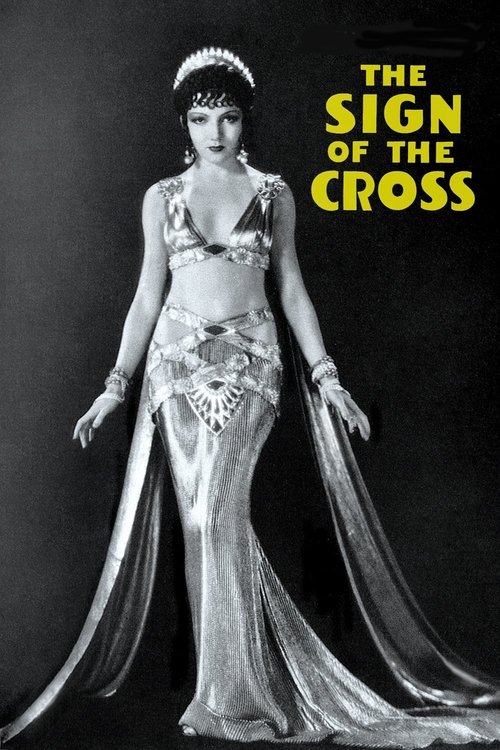
The Sign of the Cross (1932)
Genre
:
Drama | History Rating
:
6.465 / 10
Release Date
:
13 December 1932 Resolution
:
1920x1080
Duration
:
2 : 6 minutes
Spoken Language
:
English Status
:
Released Overview
:
A Roman soldier becomes torn between his love for a Christian woman and his loyalty to Emperor Nero.
Cast Overview :

Marcus Superbus - Prefect of Rome
by: Fredric March

Mercia
by: Elissa Landi

Empress Poppaea
by: Claudette Colbert

Emperor Nero Claudius Caesar
by: Charles Laughton

Tigellinus
by: Ian Keith

Titus
by: Arthur Hohl

Favius Fontelas
by: Harry Beresford

Stephan
by: Tommy Conlon

Glabrio
by: Ferdinand Gottschalk

Dacia
by: Vivian Tobin

Licinius
by: William V. Mong

Ancaria
by: Joyzelle Joyner

Viturius
by: Richard Alexander

Strabo
by: Nat Pendleton

Servillius
by: Clarence Burton

Tybul
by: Harold Healy

Philodemus
by: Robert Seiter

Tyros
by: Charles Middleton

Colosseum Spectator (uncredited)
by: Henry Brandon

Christian Martyr / Gladiator Leader / Voice in Coliseum Mob (uncredited)
by: John Carradine

Christian on Stairway (uncredited)
by: Dave O'Brien

Crocodiles' Victim (uncredited)
by: Sally Rand

Chaplain Costello (1944 Re-Release Prologue) (uncredited)
by: Arthur Shields

Hoboken (1944 Re-Release Prologue) (uncredited)
by: Tom Tully

Bettor of 300 Silver
by: Lionel Belmore

Little Girl
by: Ynez Seabury
Member Reviews :
With Nero (Charles Laughton) on the throne of Rome and his scheming Empress Poppaea (Claudette Colbert) almost as maniacal as he, we enter a city on day three of the great conflagration. The emperor is more concerned by a broken string on his lyre as Tigellinus (Ian Keith) brings him disastrous news. The fires are starting to go out and what's more the citizens are beginning to wonder if he is the incendiary. A scapegoat must be found, and it just happens that a pesky sect called Christians could do that job nicely. The Prefect - "Marcus" (Frederic March) is summoned and ordered to wreak havoc on them all, save for a few who are to be saved for the arena. He's willing enough to carry out his task until he espies "Mercia" (Elissa Landi) whom he decides to protect from the edict. Needless to say, this doesn't go down so well with the jealous empress who has her eyes on him as a sort of reverse concubine, and therefore Nero's very perilous displeasure beckons. What future might they have? What future might any of them have? It's a straight take on the "Quo Vadis" story that oozes excess, violence and religiosity right from the start. The astonishingly (for the times) effite Laughton isn't on screen quite enough to really convey just how debauched he and his government were but his scenes are still impactful and Colbert augments those with a deliciously malevolent performance in a role that could have been written for her. March is proficient here throughout and Landi crafts a butter-wouldn't-melt "Mercia" in a fashion that convinces us that whatever happens, no lion is ever going to feast on her pallid flesh. The visuals are great: the structures of Roman grandeur; the costumes and the scenes in the Coliseum are all really quite impressively photographed and though the editing is a bit brutal at times, this is Cecil B. DeMille striving for his 1930s Christian-faith merit badge whilst indulging in just about everything decadent, sexually fluid and fetishist that the real Neroic court might have dreamt up for our awe and sinful entertainment two thousand years earlier.