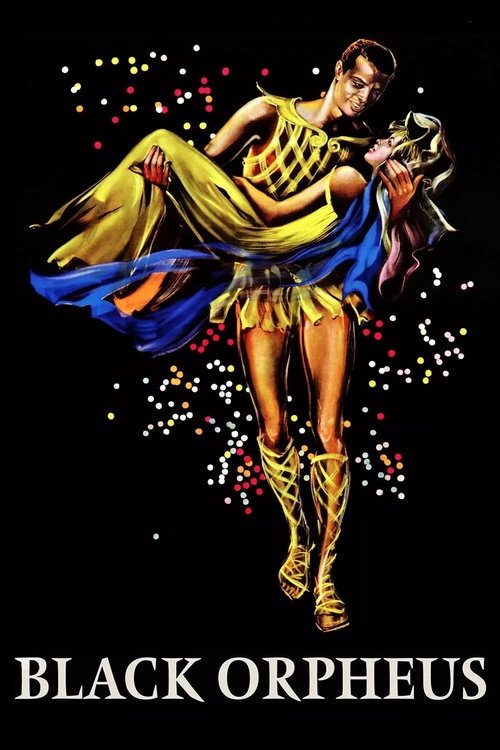
Black Orpheus (1959)
Genre
:
Drama | Romance Rating
:
7 / 10
Release Date
:
12 June 1959 Resolution
:
1920x1080
Duration
:
1 : 40 minutes
Spoken Language
:
Português Status
:
Released Overview
:
Young lovers Orfeu and Eurydice run through the favelas of Rio during Carnaval, on the lam from a hitman dressed like Death and Orfeu's vengeful fiancée Mira and passing between moments of fantasy and stark reality. This impressionistic retelling of the Greek legend of Orpheus and Eurydice introduced bossa nova to the world with its soundtrack by young Brazilian composers Luiz Bonfá and Antonio Carlos Jobim.
Cast Overview :

Orfeo
by: Breno Mello

Eurydice
by: Marpessa Dawn

Mira
by: Lourdes de Oliveira

Serafina
by: Léa Garcia

Death
by: Adhemar Ferreira da Silva
Chico
by: Waldetar De Souza

Hermes
by: Alexandre Constantino
Benedito
by: Jorge Dos Santos
Zeca
by: Aurino Cassiano
Little Girl
by: Maria Alice

Ernesto
by: Marcel Camus

Fausto
by: Fausto Guerzoni
by: Thereza Santos

by: Zeni Pereira

by: Elizeth Cardoso

by: Cartola

by: Dona Zica
Member Reviews :
I reckon this was always going to be a bit of a creatively risky venture and for me: a Frenchman moving a Greek myth to the culturally diverse Brazil was always going to be quite an ask. It's colourful and well cast, but I am afraid the story just muddled up too many themes for me. The premiss is the same as the ancient story, with this time "Eurydice" (Marpessa Dawn) having fled her home town to avoid the unwelcome attentions of a suitor. She encounters tram driver "Orfeu" (Breno Mello) and pretty much instantly they hit it off. He serenades her with his carousing guitar music - despite the fact that he is already promised to "Mira" (Lourdes de Olivera). Guess what? "Mira" isn't too impressed with her boyfriend's philandering and when "Eurydice" goes off the grid amidst all the celebrations and colour that is mardi gras, "Orfeu" suspects everyone and must set off on a search that will test his mettle and his love - and put him in the path of death itself! I enjoyed the idea but somehow it just didn't quite work. Surely there must be local mythology that could have been better applied here? It reminded me a little of Preminger's "Carmen Jones" (1954) in that by simply relocating a classic story to a new and vibrant scenario, you lose quite a lot of what made the original story work in the first place - even if it is a timeless love story that ought, on paper, to be easily transferrable. There's no doubt, though, a cracking chemistry between Mello and Dawn and I did enjoy Olivera's performance too. There is some beautiful and captivating photography of Rio de Janeiro that does illustrate the vibrancy of the place, and it's a beautiful film to watch. The story? Well I'm not so sure it marries so well and there's just too much focus on the environment and not enough on developing the characters.