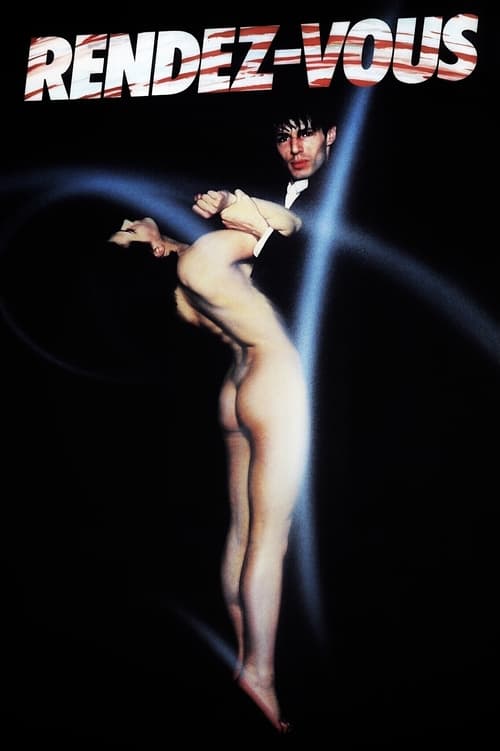
Rendez-vous (1985)
Genre
:
Drama | Romance Rating
:
5.6 / 10
Release Date
:
15 May 1985 Resolution
:
1920x1080
Duration
:
1 : 22 minutes
Spoken Language
:
Français, English Status
:
Released Overview
:
Nina is a young, carefree actress who arrives in Paris searching for her big break. There, she finds drama both on- and offstage as she becomes involved with three men: a mild-mannered real-estate agent who offers her stability, a bad-boy actor who lives dangerously on the edge, and an intense theater director who casts her in a production of “Romeo and Juliet.” As opening night approaches, the emotional extremes of Nina’s love life fuel her art.
Cast Overview :

Quentin
by: Lambert Wilson

Nina
by: Juliette Binoche

Paulot
by: Wadeck Stanczak

Scrutzler
by: Jean-Louis Trintignant

Gertrude
by: Dominique Lavanant

Fred
by: Jean-Louis Vitrac

Max
by: Jacques Nolot

Administrator
by: Anne Wiazemsky

Olimpia
by: Olimpia Carlisi
by: Caroline Faro
by: Katsumi Furukata

Journalist
by: Arlette Gordon
Stage Manager
by: Philippe Landoulsi

Flower Seller
by: Madeleine Marie
Stage Actor
by: Serge Martina

Daisy
by: Michèle Moretti
Stage Actress
by: Annie Noël
Drunk Guy
by: Patrick Pérez
Member Reviews :
This film includes some graphic scenes that in any other picture would likely feel extremely gratuitous. And yet, Rendez-vous is so well executed that that isn't the case here. Mind you, the scenes are still very graphic, but they don't feel gratuitous; rather, they feel like a natural and necessary element of the story.
Focusing on a young woman who has moved to Paris to become an actor, the story follows her as she suffers through a range of extremely trying and tumultuous experiences. She is young and vibrant, and sexually free, and yet - perhaps as a direct result of this unguarded personality - she is exploited, taken advantage of, and preyed upon at every moment by the various men who move in and out of her life. The emotional toll this takes on her is plainly evident, and the way that her care-free spirit is slowly stripped away is tragic to witness as the story progresses.
The emotional transformation of Nina is brought to life by Juliette Binoche, in a truly fearless and superb performance. She deserves much credit for this film; she is physically and emotionally exposed throughout, and the authenticity of her performance is never in question. The supporting roles in this film are stellar as well, but not one performance can match that of Binoche. This is her film, through and through.
I found this movie to be quite unique. Paris has never looked more foreboding and working-class as it does here (perhaps save for 400 Blows), the graphic depictions of sex never come across as unnecessary or gratuitous, and the story at the heart of the film feels genuine and tragic. Though I don't know that I would recommend it to anyone but unapologetic cinemaphiles, that in no way diminishes its quality.